
OPINION
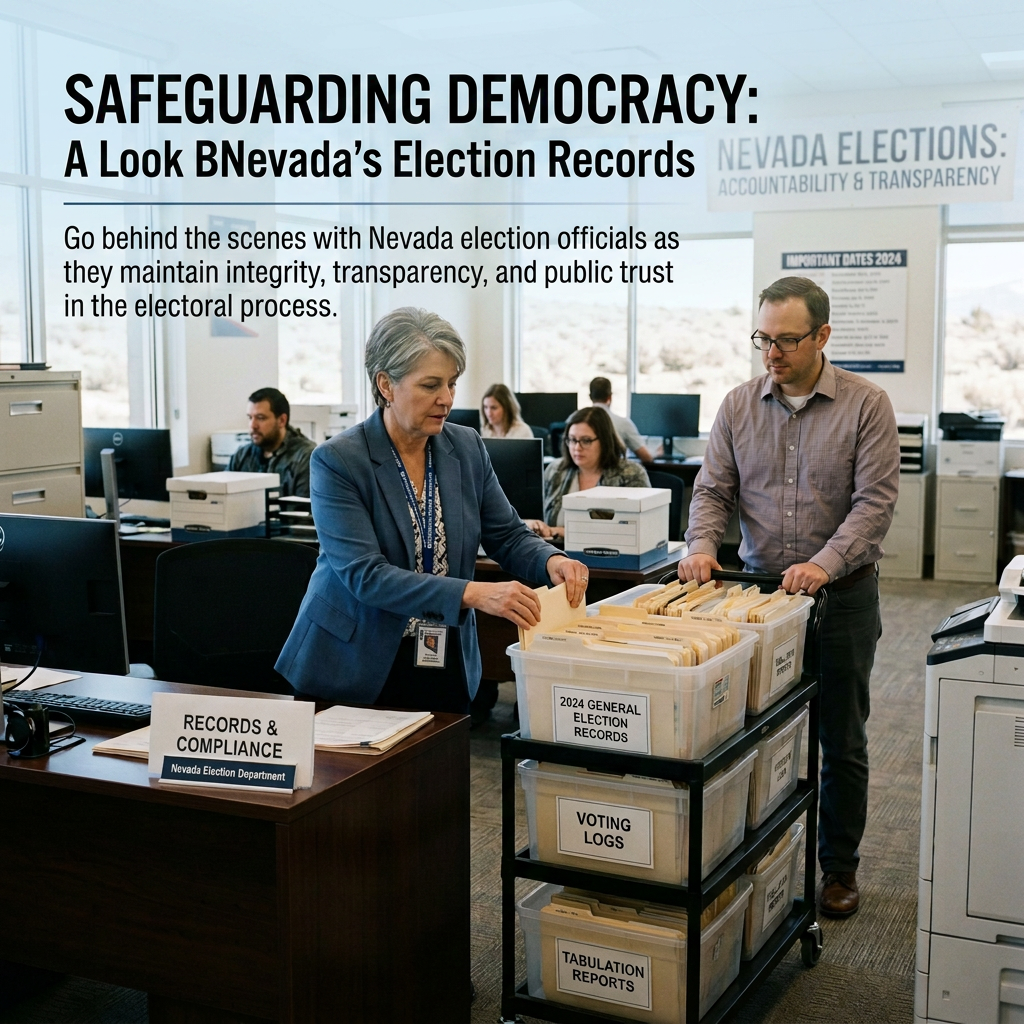
The Nevada Independent reported Monday that the Trump administration has directed Nevada election officials to preserve all records from the 2024 election while litigation over federal access to voter-registration data continues. Secretary of State Cisco Aguilar called the move “a pretty direct threat” and described it as intimidation.
That framing skips over the most important legal distinction in the story: preserving records is not the same thing as turning them over.
Nevadans can reasonably debate how much voter data the federal government should be allowed to obtain. They can also reasonably insist that records potentially relevant to ongoing litigation not be destroyed while the case is still alive.
Preservation and disclosure are different questions
Federal law generally requires election officials to retain certain federal-election records for 22 months. That period has now expired for the November 2024 election. But the dispute between Nevada and the Department of Justice did not disappear with the calendar.
According to The Nevada Independent, the Justice Department told Nevada to preserve 2024 election records because litigation remains ongoing over the federal government’s attempt to obtain unredacted copies of the statewide voter file. The state has reportedly told local election offices that the records must be preserved because of that litigation.
That is not an exotic concept. Federal Rule of Civil Procedure 37 addresses the duty to preserve electronically stored information that should be retained in anticipation of or during litigation. The rule exists because once potentially relevant evidence is destroyed, a court cannot meaningfully resolve disputes over whether that evidence should have been produced.
In other words: keep the records now, fight about access later.
Nevada has a legitimate privacy argument
This does not mean Nevada was wrong to challenge the federal government’s demand for an unredacted statewide voter list.
On August 14, Attorney General Aaron Ford announced that a federal judge had dismissed the Justice Department’s effort to compel Nevada to provide an unredacted voter file containing sensitive information, including driver’s-license numbers and partial Social Security numbers. Ford’s office argued that turning over that information would violate Nevadans’ privacy and exceed federal authority.
Those privacy concerns deserve to be taken seriously. Election integrity does not require the government to casually circulate sensitive personal information. A responsible federal-state relationship should include safeguards for how voter data is transmitted, stored, accessed and used.
But a court ruling against immediate disclosure is not the same thing as permission to destroy records that may still be relevant to an appeal or related litigation.
Calling preservation “interference” muddies the issue
The Independent characterized the Justice Department’s action as part of a broader effort to “interfere in Nevada elections.” Aguilar called the preservation demand intimidation.
Those are political judgments, not neutral descriptions of the underlying act.
If the federal government were ordering Nevada to change vote totals, alter ballot rules, discard lawful ballots or turn over protected personal data in defiance of a court order, “interference” would be an appropriate concern.
But telling a litigating party not to destroy records while a legal dispute remains pending is different. Nevada itself appears to recognize that distinction because state officials instructed local election offices to preserve the records.
That does not settle the separate legal question of whether the Justice Department is entitled to inspect every category of information it seeks. It simply means the evidence should still exist when a court answers that question.
Transparency cuts both ways
Conservatives have spent years arguing that public confidence in elections depends on auditable records, transparent procedures and meaningful post-election review. That principle should not change depending on which party controls Washington or Carson City.
Likewise, officials who oppose federal access should not have to surrender legitimate privacy protections simply because they are being accused of hiding something.
Both principles can coexist.
Nevada should preserve the 2024 records. The Justice Department should pursue access through the courts. Judges should decide what federal law permits the government to inspect. And if sensitive voter information is eventually produced, strict privacy protections should govern its handling.
That is what the rule of law looks like: preserve first, litigate second, disclose only what the law requires.
The public deserves less rhetoric and more precision
Election stories are uniquely vulnerable to loaded language because every side knows voters already distrust the system.
That makes precision more important, not less.
The Trump administration is not merely asking Nevada to “keep old files” for no reason. There is active litigation over those records. Nevada is not necessarily “hiding voter rolls” simply because it objects to handing over unredacted personal data. And preserving records is not equivalent to conceding that the federal government is legally entitled to them.
Those distinctions matter.
The public should be able to expect two things at once: strong protection of voter privacy and complete preservation of election records while legal challenges remain unresolved.
Nevada can do both.
Sources: The Nevada Independent, Sept. 7, 2026; Nevada Attorney General, Aug. 14, 2026; U.S. Department of Justice, Dec. 12, 2025; Federal Rule of Civil Procedure 37(e).